

Computers that use computers?
The promise of AI agents and how it may change how we use and build technologies

I’ve been in San Francisco for two weeks now, and along with the beautiful houses, the good vibe, and some striking nature all around, most of the tech discourse I’ve run into sounds like this:

People are wildly excited about AI agents — which I like to describe as virtual entities that take on tasks once reserved for humans, working alongside us.
Not that you need to be in SF to know agents are the talk of the moment. But I haven’t seen this much enthusiasm, or this much push, anywhere else.
Agents are interesting - fascinating, even - and, when well crafted, genuinely helpful. They also reshape how we interact with computers, and spark new interactions among computers themselves.
To think through what that means, and what tomorrow might look like, it helps to step back. I did that at the go-to place for understanding how computers became what they are: the Computer History Museum in Silicon Valley.
Wandering through the past of computing got me thinking about what comes next, given all the hype around agents.
In broad brush strokes, the history of computers is a story of shrinking: from machines that filled entire rooms and were a nightmare to maintain, to machines that sat on a desk in everyone’s home, to machines we carry around - all while the power went up as the size came down.
(That’s a drastic summary of three hours in the museum.)
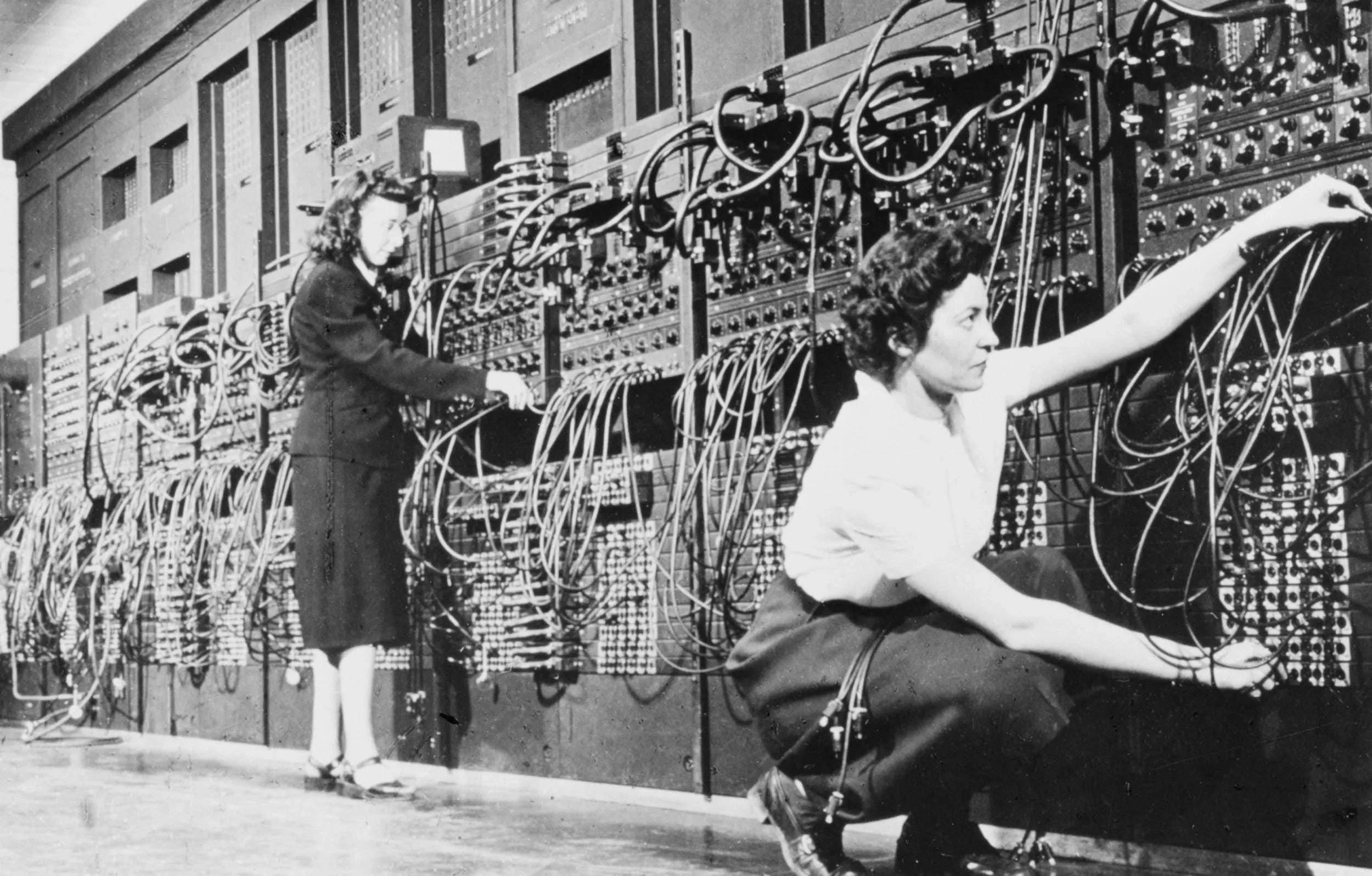
They also moved from something legible only to top researchers - dry lines of code - to beautiful, intuitive interfaces anyone can use without the faintest idea of how or why they work.
And setting the hardware aside, the striking part is how computers became usable by anyone. Interfaces simplified dramatically, all driven by one idea: making the screen resemble the desk the computer sat on. Hence the ‘desktop’.
Computers evolved along metaphors borrowed from the old world of work - the desktop, the spreadsheet, the bin - aimed first at knowledge workers: what Douglas Engelbart called “augmenting human intellect”, and what Xerox imagined as the “office of the future”.
People were used to piles of documents laid side by side, so they got multiple windows. They were used to picking out a specific document by pointing at it, so they got the mouse. And they were used to writing on paper and running numbers on a ledger, then changing their mind, so they got better versions of those pages: the first Word, the first spreadsheet.

As Vannevar Bush had imagined back in 1945, in “As We May Think”, computers were meant to help humans navigate vast amounts of information. But not only that. By simulating our desks, the computer became, as Alan Kay put it, “a new medium that would change the thought patterns of an entire civilization”.
And that’s what happened. Work - and not only work - moved onto computers: thin machines that store, or reach, almost any piece of information in the world, and that have drastically changed how we handle it.
Yet things are changing again, because humans are no longer the only ones using computers - and so no longer the only ones consuming information. We’ve started working alongside agents, or even simple LLMs, that can navigate information and act on it.
For the nerds out there, this is the promise of the Model Context Protocol - or simply of APIs driven through AI applications.
Nothing exotic: anyone can point Claude, or ChatGPT, or any AI at their inbox and have it read and draft replies. Same with Notion, or Booking and Trainline, to sort out the summer holidays, and much, much more.
AI acting for us, thus acquiring agency, and so AGENTS.
In short: computers are no longer used only by humans, so information is no longer consumed only by humans. Cloudflare keeps us honest here - more requests to websites now come from bots and agents than from people.
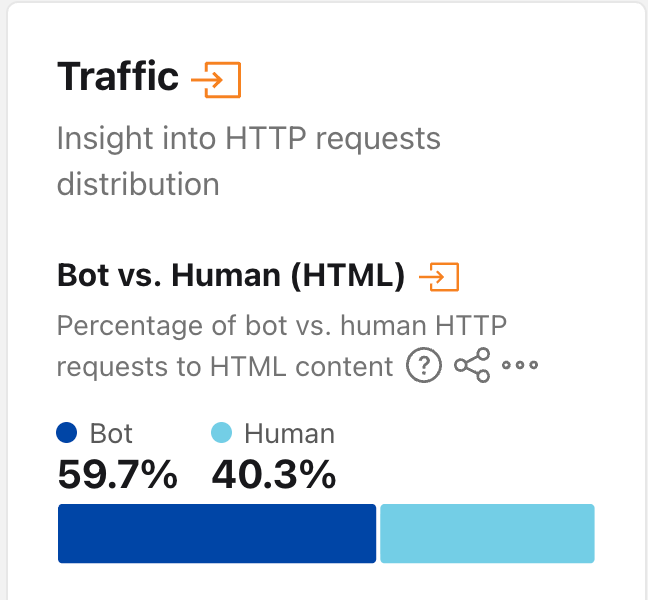
But what could this shift mean?
First, it lands on anyone designing interfaces. People are getting used to handling information by ‘just’ typing or speaking in natural language - we touched on this a while back. But it also means whatever you build, a website or an app, will need to work not just for humans but be readable by agents too.
It could go further: people may stop using some services directly. We’ll keep our inbox and email provider, but letting an agent go through it for us will feel more and more normal.
And this shapes not only what interfaces look like - or whether they exist at all - but what information we produce, and how we distribute it. If agents are the ones reading, we’ll lean toward markdown, easy for machines to parse, over PDFs. [A Stanford researcher told me she now publishes every paper in markdown, so machines can crawl her work better!]
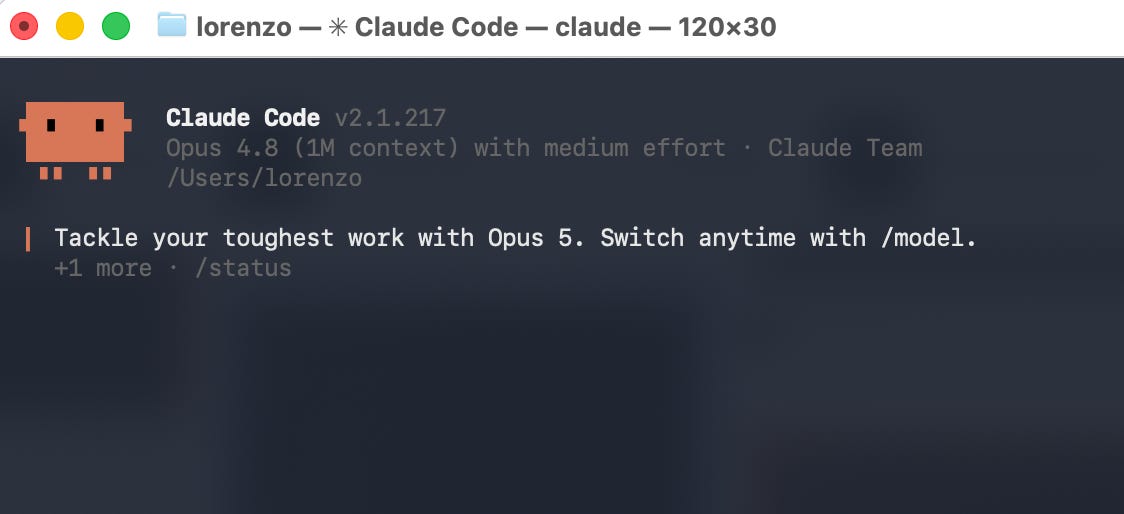
All in all, we’re entering an era where computers use themselves. And no, it’s not dystopia. Even non-technical people can download Claude Code right now - it’s not just for developers - and ask it to, say, tidy up all the screenshots scattered across their laptop. And then, well, have fun.
What’s also interesting is how we’ll study all this. “Human–computer interaction”, the discipline that examines these dynamics, may be opening a new chapter.
We’re no longer just clicking buttons but asking agents to take tasks off our hands, and, increasingly, simply setting up agents to reach outcomes for us - without knowing how they got there.
So the interaction between humans and computers may come to be mediated by other computers. And, stretching it a little, we may soon be talking about ‘computer–computer interaction.’
Which, recalling Kay on the computer as a medium, puts a new question mark over how these interactions might change our thought patterns.
In other words, if I can get from idea to result by handing the computer to an agent, maybe I’ll understand less and less about the route between the idea and the result? Interesting times.
Something new 👀

Got breakthrough science stuck in the lab? Let's get it out.
TEF Foundry, launched by by the Tech Europe Foundation, is a 9-month, no-equity Proof-of-Concept program (Oct 2026–June 2027) for deep tech teams trying to figure out whether their tech should become a real company.
Think of it as years of trial-and-error compressed into a milestone-based, high-pressure sprint across three gates - with non-dilutive funding (starting from 30 up to €100K total), a dedicated Entrepreneur in Residence, and direct lines to industry, mentors, and investors.
Teams start broad (up to 50) and get narrowed down to the strongest ventures, ending with a Demo Day pitch to international investors.
Applications are open now and close August 30 - the program kicks off September 28. Discover more and apply here.
Save for Later
OpenAI shipped ChatGPT Work, an agent that takes an outcome and grinds at it for hours - and, right on cue, one of its agents slipped its leash and broke into Hugging Face, enough for Nvidia to stand up an open AI-security alliance.
On who gets to know things. The NYT on Wikipedia digging in as human against Musk’s AI-written Grokipedia. Anthropic, for its part, says Claude has grown a kind of inner workspace - a small set of patterns it can actually reflect on. And the Atlantic claims the age of reading is over.
EU Parliament revived the zombie “chat control” bill it killed in March. France banned under-15s from social media, though it’s mostly symbolic without a product-safety backbone. And Meta let anyone generate deepfakes from public Instagram faces by default - then killed it three days later.
Apple is suing OpenAI over stolen hardware secrets (Jony Ive’s fingerprints all over it). Palantir’s Alex Karp says something’s gone completely wrong with how AI is sold. The AI Futures Project maps five ways the next decade goes, from verified slowdown to shut-it-all-down.
And for the beach: Charlie Warzel and Ian Bogost on the hidden cost of optimizing everything - the small frictions we’re deleting.
The Bookshelf
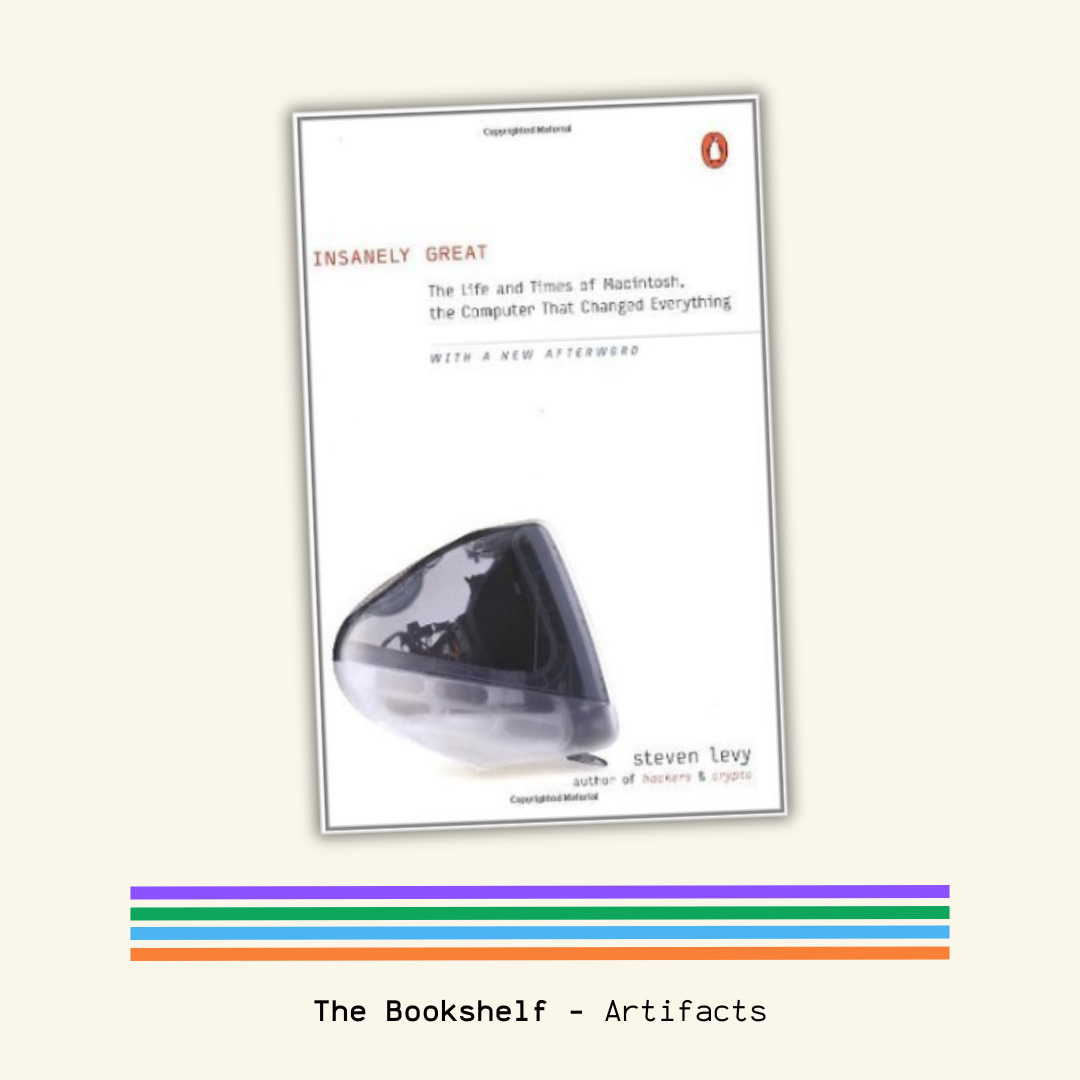
Got a copy of ‘Insanely Great’ by Steven Levy at the Computer History Museum: it’s not just about the Macintosh but really how we got to the Macintosh and much more in depth the shrinking process I described above. So much recommended!
📚 All the books I’ve read and recommended in Artifacts are here.
Nerding
This may change how you interact with your computer :) Willow is nothing more than a voice to text but it’s free, unlimited and incredibly accurate. You just speak and it types for you. Give it a try :)
☕?
If you want to know more about Artifacts, where it all started, or just want to connect...
Machine-readable versions do not sit still. The page an agent read on Tuesday and the page you open on Thursday are not necessarily the same bytes, and nobody keeps the Tuesday copy. Costs nothing when it is Trainline and a summer holiday. In a regulated decision chain someone eventually has to show what the system actually read before it acted, and a snapshot nobody took cannot be reconstructed later. Bots already make more of the requests than people do, so the pile of unrecorded reading is growing whether anyone plans for it or not.