

Writing is thinking?
And what is the impact of LLMs on our ability to translate thoughts in words.

Don’t look away, I’m quite sure this has happened to you as well:
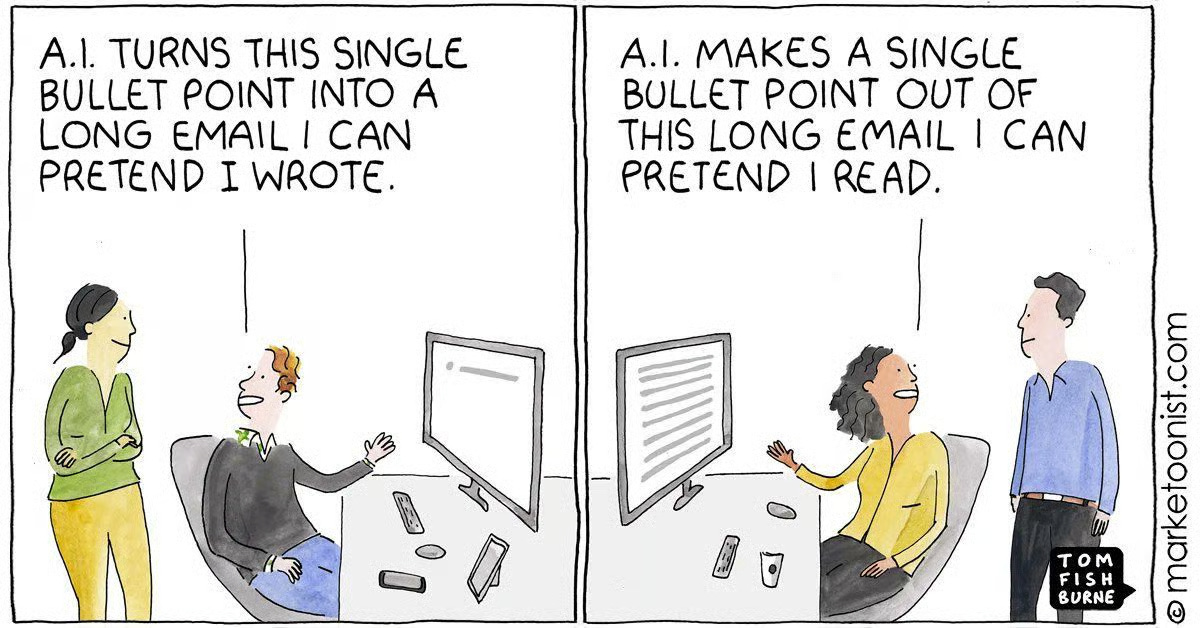
I admit too that I rarely draft work emails 100% by myself.
But let’s look at the broader picture: we live in an era where producing a significant amount of language with meaning is more efficient and less time-consuming than ever. You can literally get 10 pages of anything in a few minutes by asking any LLM to do so.
Yet, this doesn’t mean we’re producing more knowledge or that the amount of meaning keeps pace with the length of the documents spit out by machines.
Rather, LLMs are great at producing stuff that makes sense, sounds good, and neatly organises notions, being able to package information either in a few bullet points or uselessly long documents.
Not surprisingly, though, the level of these texts can’t help but be average, as LLMs are, technically but also philosophically, ‘technologies of average both in the quality of the writing and in the calibre of the ideas.’
(And usually also badly written imho)
Not only creating, but also consuming language has been drastically simplified (I swear I wrote this sentence 😅): we may be often asking an AI to help us read and summarise a document that someone else asked AI to make longer.
Just look at newspapers apps or any reading app or even the iPhone, that now has introduced AIs to quickly give the 3 key points of anything.
I like to call this the accordion of AI language: we keep making texts longer or shorter depending on our needs only cause doing it is very, very easy.

And so producing simple, beautiful BULLSHIT is now extremely time-efficient, cheap and accessible 🎉 Just peek at your LinkedIn feed if you need validation.
But that’s not as much of a problem.
What’s worse and deeply concerning is that producing language has become a commodity.
Large Language Models have made it so easy to turn a few words of a prompt into newly created language.
Yet, this makes us skip the complex, fascinating process through which we translate our thoughts into language, and thus words. LLMs are our mediums.
And this means that language is less of a tool - even a technology or an artefact - through which we think and instead just a code enabling communication.
All in all, we can now think less to produce language.
This comes with a few implications:
We’re no longer writing but rather ‘meta-writing’: we more and more dictate to a machine what we need to write and maybe even how and in what style, and then we delegate the act of writing or typing words to machines.
And so we stare at screens while language is being produced by LLMs, skipping the process of thinking through what we aim to communicate.
This way, writing is no longer a flow of 1st draft out, correcting it, changing, refining, but a back-and-forth exchange with a machine. As argued in Nature, though, ‘Writing compels us to think — not in the chaotic, non-linear way our minds typically wander, but in a structured, intentional manner.’
Yet, the ability to iterate over and over on a text quickly, asking an AI to ‘make it more interesting’ or ‘make it sound more natural’ or whatever non-sensical prompts, may decrease the time we spend on and with the language that should express our thoughts.
So we may also understand less about what we’re ‘writing’ about but also devote less care to what we’d like to emphasize and what requires less attention, which is one of the most critical skills of thinking and writing.
At its extreme, I sometimes consider writing the process by which we realise that we don’t understand what we’re talking about - and sometimes this is so important.
This goes hand in hand with two other critical skills of writing and thinking: the ability to break down complex issues into simple words as well as the ability to write concisely, while not compromising on the meaning of what we say.
And still on the drafting and redrafting part, we, as writers, are less and less the first careful readers of what we produce, as we assume that LLMs will never have typos (rightly so, actually).
Finally, allow me to be a bit romantic, but writing - like reading - is a great process of self-discovery.
As I’m writing this Artifacts, I love seeing the mental connections I make, how I bridge different things I read in the past, what a friend maybe told me - I thoroughly enjoy the time and feeling of the whole process.
And I do feel a sense of care, of being clear and readable, so that your reading is enjoyable and an interesting time. And I’m sure it’s the same for you, when you write.
This being said, I’m not saying the final outcome of what I will produce would necessarily be better than an LLM (well, I hope), but the process itself of writing is probably also part of why you’re reading this piece.
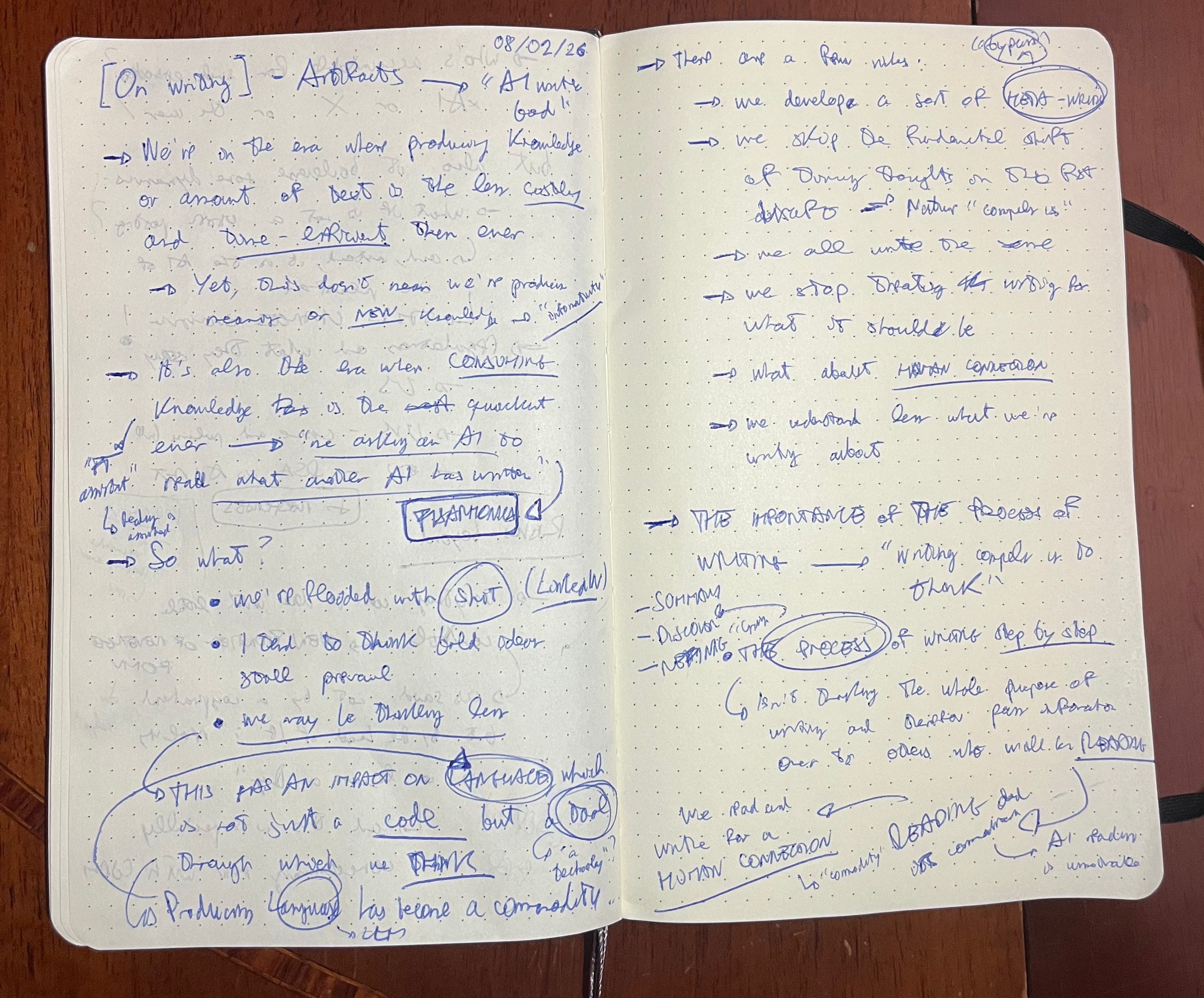
Indeed, I argue that we read what others write cause we’re interested not just in the content of their writing - that could be produced by LLMs - or the information conveyed, but also in why they wrote that something, what moved them, and, simply, in getting to know what they think.
And so that a text - and thus the language of a thinking process - can resonate and establish a new human connection.
Save for Later
If a Ferrari gets designed by the person who created the iPhone.
But also a collection of bad design tricks that gets us trapped into services, so cool! And, speaking of design, what the EU Commission is looking into TikTok for, trying to make it better
The truth on the social media powered by AI agents. And where the truth really is between Wikipedia and its alternatives.
AI Safety and where we are at, with the most comprehensive report. While someone bought AI.com for a lot of money.
Anthropic keeps doing super cool. Just look at this spot on adv on AI to mock OpenAI:
The Bookshelf
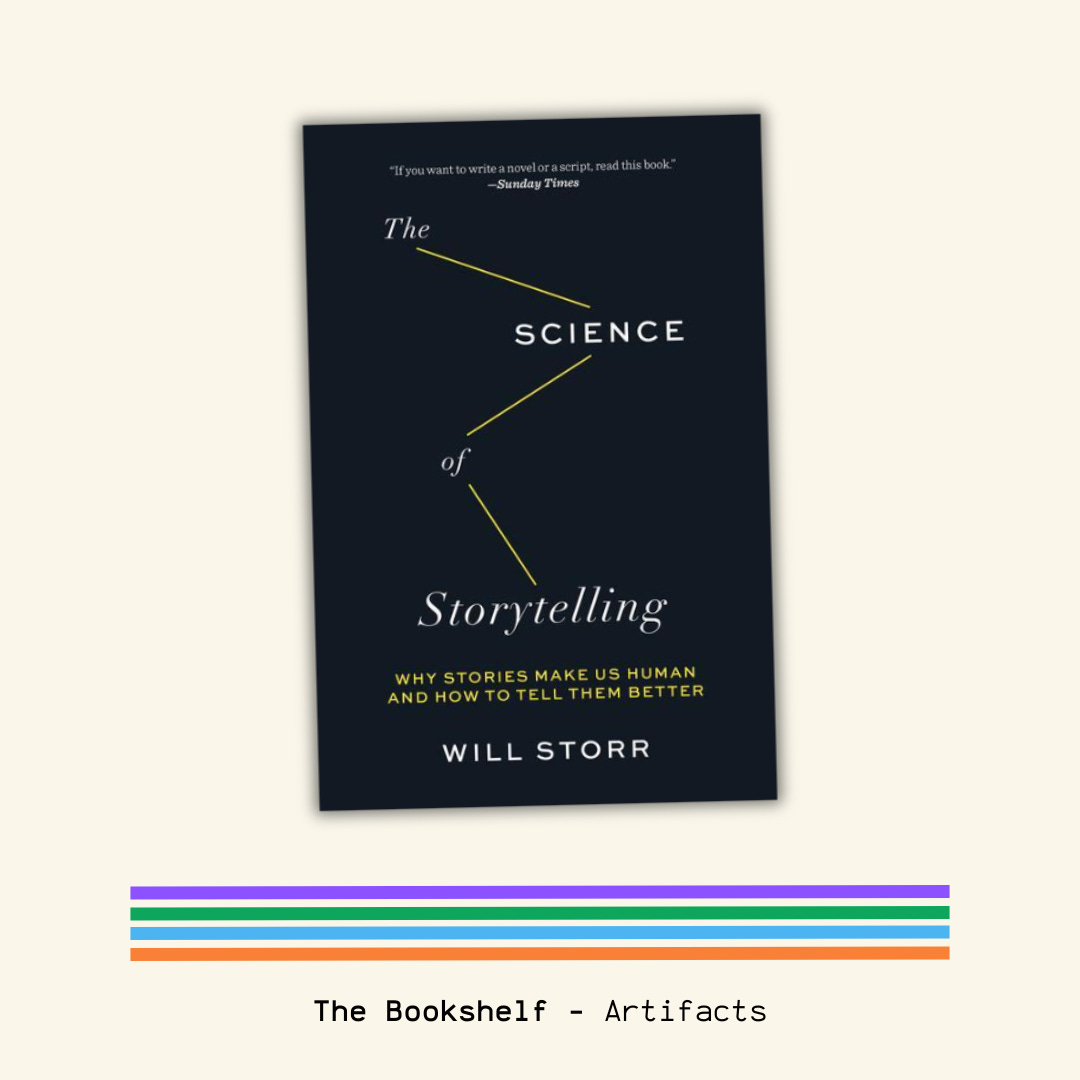
If you’re into why good writing and good stories are not just nice to read but actually part of why and how we understand the world, “The Science of Storytelling” is the book to read. It has a scientific part too but it also provides a few ideas on how good writing is crafted.
📚 All the books I’ve read and recommended in Artifacts are here.
Nerding
If you wish to visualise Wikipedia pages on a board like a mental map, then Wikiboard is the tool you may be looking for. I guess it can be so helpful while running a research - and also to keep supporting Wikipedia, one of the best places of the Internet!
☕?
If you want to know more about Artifacts, where it all started, or just want to connect...
Thank you for such a beautiful piece. Indeed, writing even a quite simple email without then polishing it with some AI tool feels as if you expose yourself too much. Yet, I do miss reading English-language texts by people from very different language cultures, where you can sense how English grammar and vocabulary are influenced by one's different language logic, personal experiences, or cultural references. Indeed, AI-edited text is much more refined and balanced, but as you pointed out, it's also much more average, sometimes to the extent of being blunt.
Perhaps, apart from the writing process shifting from "dialogue with yourself" to "dialogue with a chat", our writing also changes as we don't actually write but mostly type these days. What do you think about this?
What an interesting piece! Many important and urgent issues are brought together and addressed with an original and engaging perspective.
The flattening of the creative writing process into a bilateral dynamic of back-and-forth interaction with a model is a very real and concrete risk, which may be rooted in a fear or reluctance to accept the effort and complexity of the process of self-discovery.
Language is the stormy fluid in which identity, difference, development, and care interact in dynamic and unstable ways. The complexity of language, like that of reality, is profoundly irreducible and restless, and this certainly does not constitute a driving force on the path to efficiency. But in reality, it informs a vitality and a sense of care that does not consist in preserving the integrity of thoughts or positions, but in responding to its visceral and uncertain dynamics.
From this perspective, delegating is giving up, synthesizing is reducing, expanding is reiterating, if the catalyst of the relationship between human writers and generative artificial intelligence is the efficiency and simplification of complex processes and dynamics.
However, an approach that is aware of the profoundly problematic nature of the relationship between idea and form, between content history and message, can reveal numerous alternative and intriguing paths.
If we can understand writing as an unstable process, and language as the energy and the ground of this process (among others), which leads us through the history of our ideas and encounters (intellectual and otherwise), the availability of an LLM as an actor in this process can become an inexhaustible source of dynamism, complexity, and creativity. This relationship can bring into play the sense of care that informs expression and communication in a new, perhaps even broader field, where the relationship is not the center of gravity but the energetic core, where content is the place of engagement and dialogue, not the end of the process.
Thank you for this precious opportunity for discussion and reflection, and congratulations on this work, which is part of the exploration of a complexity that marks and permeates the entire experience.