

Who holds the key?
Why the new Siri will not make it to Europe and when the design of a technology just clashes with regulations

It’s no wonder someone might recently have thought ‘why can’t Siri just be as good as ChatGPT voice?’. That’s probably something Apple was well aware of and that’s why at the latest WWDC they announced the new SiriAI, which promises to be more helpful than just a tool to set a timer or call your mom.
The tech bubble has welcomed it, wondering if Siri is finally good. And it does seem so: the new Siri will be an assistant that works across apps, knows who the user is and is far more integrated into day-to-day tasks.
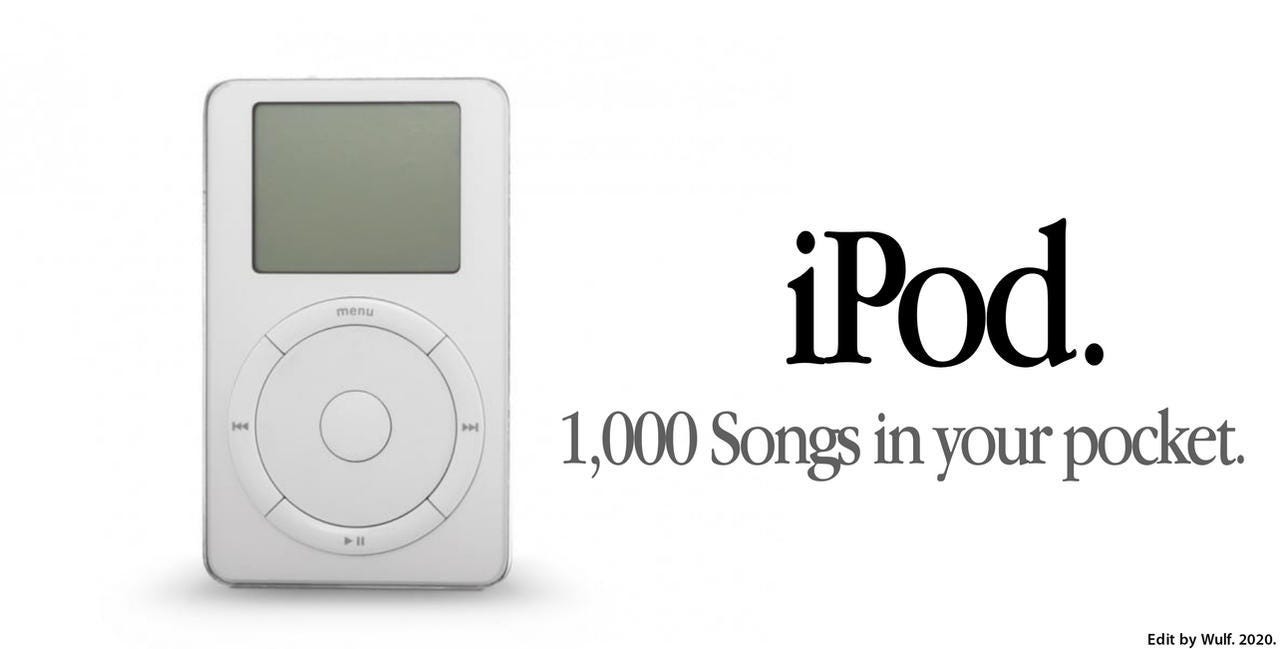
If you have watched the video to the end, you’ve made it to ‘your data stays protected’ and ‘coming to an iPhone near to you’, which echoes both Apple’s obsession with personal data protection and the successful launch campaign of the iPod promising 1000 songs in your pocket.
And that’s not just a marketing move but the core of how SiriAI has been built: a personal assistant that uses your own data, processing it directly on your iPhone, while limiting what’s sent to the cloud. So your Siri and your data literally stay in your pocket - or wherever you keep your iPhone.
Yet, not if your pockets are European ! SiriAI is, indeed, not coming European iPhones anytime soon :) (though it will be available on Mac, Apple Watch and Vision Pro)
This is, according to Apple, ‘due to the Digital Markets Act’ and to EU regulators who ‘did not accept any of Apple’s proposed solutions to bring Siri AI to the EU while safely supporting other virtual assistants.’
The EU Commission, for its part, promptly replied that the decision is “Apple’s and Apple’s only” and that nothing in its Digital Markets Act forbids the launch.
For those new to the DMA, it’s the main EU regulation trying to limit the monopoly power of some sprawling platforms (aka ‘gatekeepers’).
It’s the reason why you’re now often asked which browser you want to use, instead of Safari ruling out the rest as the default, or why Google can’t route you straight to Google Maps when you search for a town.
It’s not the first time Apple and the EU Commission have fought over the DMA, we covered it here.
This time, the fight pertains to Article 6 and the idea of interoperability: if Apple builds a capability into the iPhone, rivals should be able to plug into the same hooks, on equal terms, rather than being locked out of a system everyone is forced to live inside.
In explaining the decision, Apple fell back on one of its leitmotifs about the DMA: giving to other providers access to its systems may compromise the security and privacy of users.
Concretely, Apple is concerned about giving users access to, say, ChatGPT or Claude as a replacement for Siri because they would not guarantee the same level of security and privacy.
That’s because any AI model used by Siri is built to run on the iPhone and, for complex tasks, it will be run on Google Cloud (which partnered with Apple to train Siri) but still secured within a proprietary Private Cloud Compute framework. So Apple can be sure of what happens with Siri, far less so if it opened access to other providers.
On the other hand, these security concerns undermine the interoperability goal of the Digital Markets Act, since users have no choice over which AI assistant to use.
This is a case where the design of the technology clashes significantly with the design of the regulation, and the other way around.
Yet, this isn’t necessarily down to an incautious approach by Apple, it’s also that the DMA was conceived for a different era of much more controllable software.
For instance, when Apple or any phone provider open up the choice of the favourite browser, they can still limit and know the tasks that the browser will perform, such as opening URLs one receives on WhatsApp. In other words, these tasks are well defined.
This is different with Siri. An agentic AI assistant has a much broader scope of action: it doesn’t just answer your questions but can take action on your behalf, using different parts of your iPhone, like Calendar, phone, maybe messaging apps, etc.
Therefore, opening up to a different AI assistant is definitely different from letting users pick the browser they like.
If you like metaphors, an AI assistant is a curious, silly little guy with a master key that can open any door on your phone, while with other DMA provisions, like the browser, you are dealing with a quiet one with only a few keys :)

Finally, to give rivals the “equal access” mandated by the DMA to the new Siri, Apple wouldn’t be handing over a feature, but rather a good part of the iPhone.
And yet “handing over the phone” is kind of what Apple offered to do, eventually. Remember those “proposed solutions” the Commission turned down? The main one was a Trusted System Agent: a gateway that would let rival assistants into the phone gradually, through Apple’s own checkpoint.
Apple’s pitch was: we ship Siri AI in Europe now, and open it to competitors slowly and safely. The Commission read the eighteen months as a stall, not a safeguard, and said no.
Overall, though Artifacts doesn’t aim to take sides on the matter (which would require much more research), what’s interesting in this tale is that we’re looking at a regulation that is only a few years old, but is already straining against a technology only a few years ahead of it.
And that’s probably because the DMA was conceived for bounded and predictable services like browsers, maps, app stores with clear use cases, and thus applying it to AI agents with a broader scope necessarily means stretching it.
Thus, we could argue that the regulation is not designed for the fundamentals of the technology and, ultimately, for its design.
Yet, it also shows how the regulation of AI goes far beyond AI as a technology, how it is built and the risks it may carry, and should rather extend to how it is put to use within systems, probably forcing us to rethink regulations conceived for much more controllable and bounded technologies.
In the meantime, we wait for a better Siri and will keep using the existing one for the alarm !
Save for Later
The UK is about to ban under-16s from social media. Oliver Marsh has the nuance the headlines skip.
Speaking of age checks: nearly a million passports just leaked from PuffPal, an age-verification system for European cannabis clubs.
Meanwhile, Europe is quietly unplugging from American tech. Part of the plan: build our own social media. Meet Eurosky, the EU Commission’s favourite, running on the same protocol as Bluesky - cofounder Sebastian Vogelsang has been making the case for a while.
And the FT reckons Europe is finally flexing its innovation muscles.
Two AI-and-work papers worth your time. The Broken Ladder: is AI quietly eating the junior rung of the career ladder or it’s rather because of remote work? And Writing Code vs Shipping Code: AI lets you code 180% more but ship only 30% more - turns out the bottleneck was never the typing :)
Ah, and Meta just surprised everyone by funding its Oversight Board through 2028.
Where next?
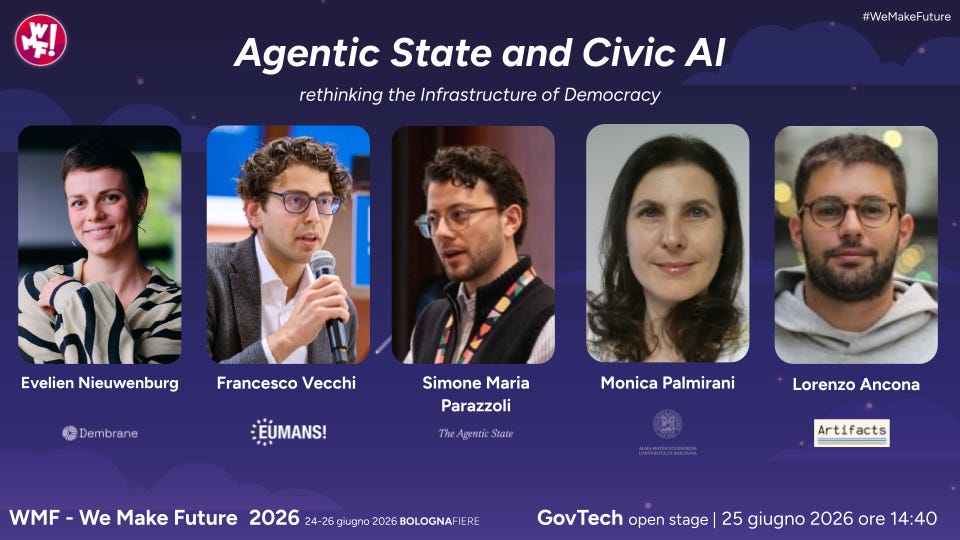
Next Thursday, Artifacts will be at the We Make Future 2026 with some cool people to talk about the Agentic State, and thus what AI agents mean when deployed in and from a government and what services they could offer to citizens.
The Bookshelf
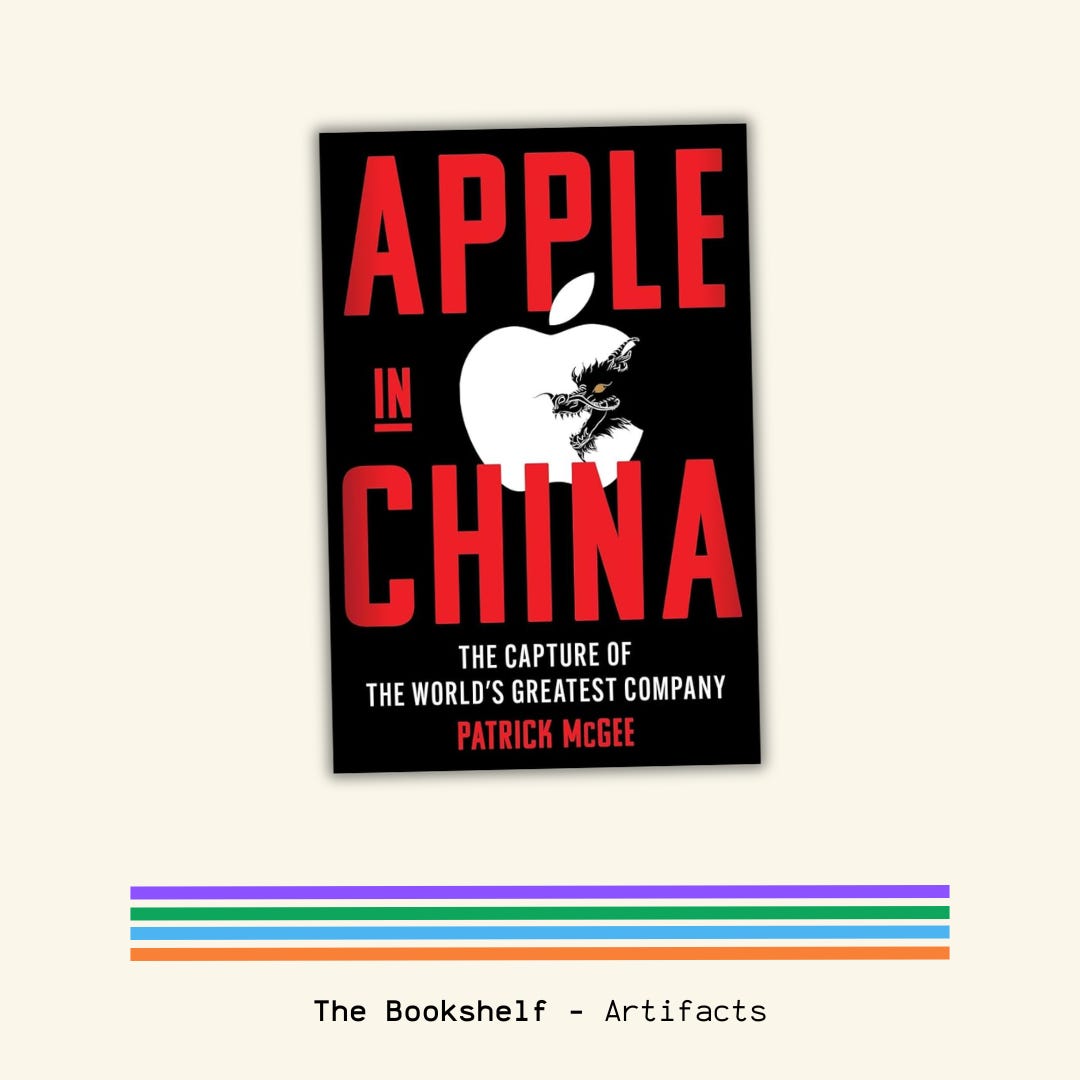
As we speak of Apple, 'Apple in China’ is THE book to read not on Siri but on how, in general, iPhones have been built over the years and how important China has become for 🍎.
📚 All the books I’ve read and recommended in Artifacts are here.
Nerding
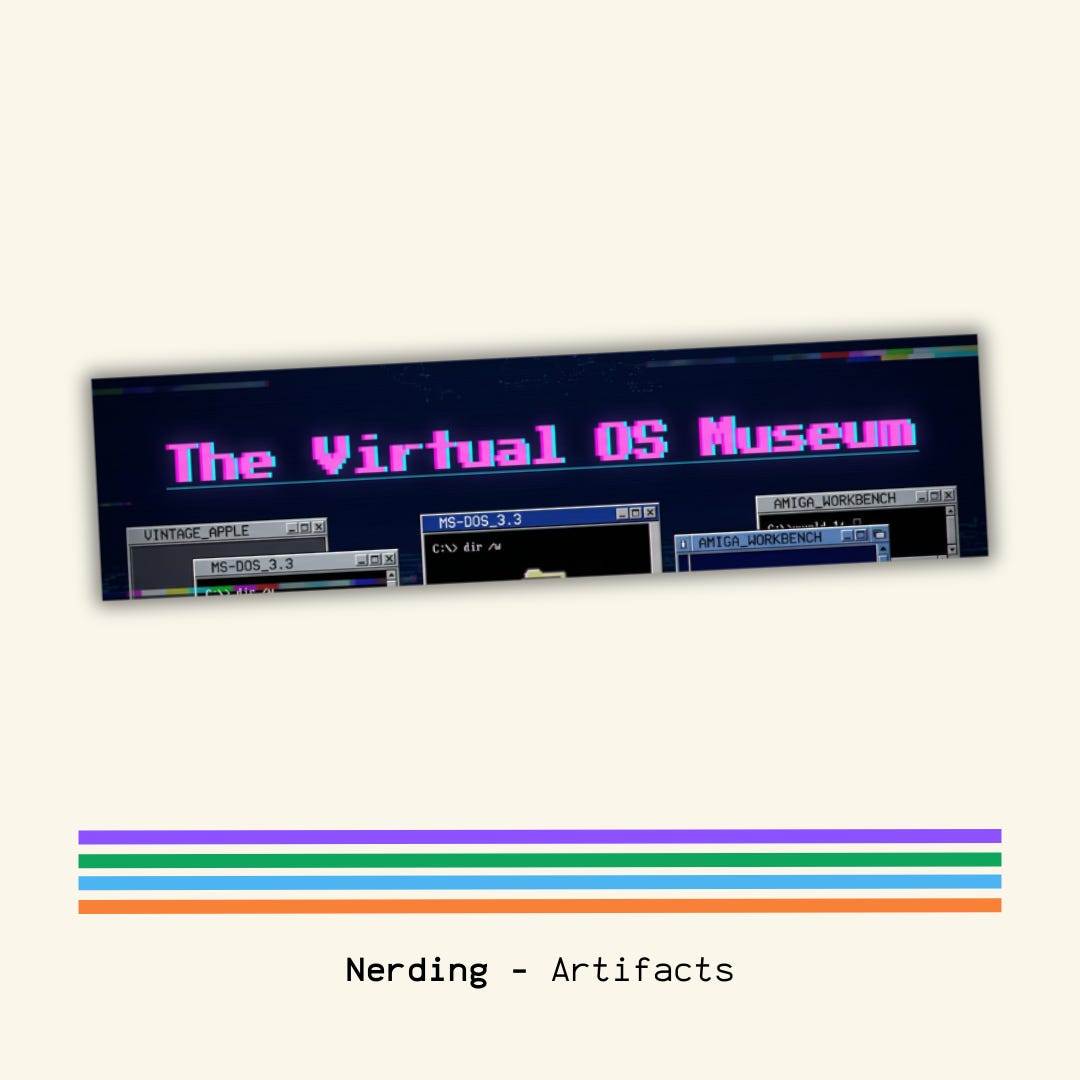
Ok this is heavy nerding, but in case you really have nothing better to do, the Virtual OS Museum is the nerdiest thing to do: see and run old operating systems and just feel the vibe of when we didn’t care much about nice interfaces :)
☕?
If you want to know more about Artifacts, where it all started, or just want to connect...
Great piece as always!