

In between
What is Political Tech and why joining its Summit, in the words of the founder

One of the reasons why Artifacts was born is to look into the people and organisations building tech products not just for consumers, but also for citizens.
How technology can enable a better democracy and participation.
Which is not just digital public services, as we discussed with the former Head of Design of the Italian Government, but any artifact aimed at citizens and their public and political life.
That’s why talking to Josef Lentsch, the CEO and Founder of the Political Tech Summit, has been so interesting.
It opened up the concept of “political tech”, how we can make it work, and what they’re already doing and will be discussing further on 23–24 January 2026 in Berlin.

If you’d like to join, there’s a discount code reserved for Artifacts readers!
And if you want to read and know more, you can read Josef’s own words below.
See you in Berlin, I hope!
The Interview
For clarity and readability, the transcript has been reviewed and lightly edited.
What exactly is “political tech”?
In democracies, governments and citizens each have their own technologies: GovTech digitizes public services and administration, while CivicTech empowers citizens. In between sit intermediaries - political parties, unions, associations, NGOs - operating in a distinct political sphere with its own needs. Political tech is the specific software, data, and tools used by these organizations, reflecting that unique space.

What was the spark moment behind creating the Political Tech Summit - and why now?
It wasn’t one moment but many. Working with political organizations, we kept seeing the potential to elevate their work through technology, yet too many relied on in‑house tools that weren’t up to the task - hurting mobilization and communications. As someone told me,
“there’s so much money being burned… there’s a mismatch between what’s being used in political organizations and what should be used.”
The summit addresses this by creating a marketplace - of ideas, products, and services - so people and solutions can connect and improve outcomes for politics and citizens.
What’s your elevator pitch for someone unsure whether to attend?
We create connections where none existed and offer the only comprehensive market overview in the space. By linking peers across political families and sectors and facilitating new business relationships, we deliver both impact and scalability. The model works economically - we capture some of the value we create - and attendees keep returning because they see that value.
So, what will one get from coming?
Exhibitors, partners, and vendors meet political professionals actively seeking methods, tools, and analysis. The result is tangible adoption and new collaborations that wouldn’t happen otherwise. Most partners are returning year over year, new ones are joining, the event has grown to two days, and we’re building a year‑round networking platform to extend that value beyond the summit.
Who should attend?
The primary audience is political professionals - staff, operatives, executives, department heads, and directors. Citizens are welcome too, and they’ll find a counter‑narrative to tech dystopia: practical examples of technology improving politics by making democracy more agile, faster, and more inclusive - think AI‑assisted citizen dialogues and assemblies. It’s also highly international, with participants from 40+ countries.
From a tech perspective, what solutions are there?
You can get a broad mix: CRMs for activist and constituent data, content moderation, data analysis, monitoring of political processes, and more.
What will we be talking about this year?
There will be 3 key themes:
Power: Everything about winning and governing with legitimacy - campaign tech stacks, rapid-response content, field ops, and measurement. Like voter data integration, message testing, targeting, and the workflows that turn volunteers into repeat mobilizers.
Protection: Keeping institutions, campaigns, and communities safe - Trust & Safety, incident response, threat intelligence, and counter-disinformation. And so content moderation tooling, deepfake detection/labelling, and narrative monitoring across platforms.
Participation: Broadening who gets heard - youth engagement, AI-assisted citizen dialogues, digital assemblies, and inclusive product design. This covers onboarding funnels that meet young people where they are (TikTok/YouTube/Discord), trust-building content, and feedback loops that convert attention into sustained participation.
Top sessions to watch?
A returning favorite is the hands‑on masterclass on the power of newsletters (“The Power of Newsletters: Lessons from Journalism for Political Parties in the Anti-Social Media Age”) in a small group, 15–20 people, pre‑registration required. Expect equally practical main‑stage sessions, including participation from the Parliamentary State Secretary for Digitization, Thomas Jarzombek (Federal Ministry for Digital and Transport).
If someone wants old‑school “policy talk,” what won’t they find?
You won’t find endless discussions - sessions are capped at 45 minutes - and you won’t see the usual suspects. Instead, you’ll see new faces and plenty of practitioners who want to dig into how things actually work.
Magic wand for next year’s edition: what’s the one thing you’d do?
I’d bring all the international officers from political organizations into the same room. Those cross‑party, cross‑country exchanges are where the energy and the potential really are.
Save for Later
How much energy do you have today?
What’s up with advertising on social media and why we should care?
Is the one of AI a real bubble? Or maybe not? Well, money is flowing in an unusual way.
How different business models are fighting.
Grammarly is no longer Grammarly. And this is not Wikipedia, it’s probably worse. Meanwhile, please stop going to touristic restaurants
Only God can save us? And why catholic voters care about AI in elections
The Internet is getting enshittified?
Where next?
Well, as clear, Artifacts will be at the Political Tech Summit in Berlin 🇩🇪 in January. But before that, we could also meet:
Barcelona 🇪🇸 — this weekend (7–9 November) at the Mozilla Festival
Lisbon 🇵🇹 — next week (10–13 November), for the Web Summit
If you’re around, drop me a line and we’ll grab a coffee together :)
The Bookshelf

Not exactly Political Tech, but for sure one of the first attempts of calculating and measuring (and maybe skewing) how voters think and how to influence their decisions. “If then” by Jill Lepore is a great journalistic reportage into Simulmatics, the American company that had tried to compute large scale behaviours.
📚 All the books I’ve read and recommended in Artifacts are here.
Nerding
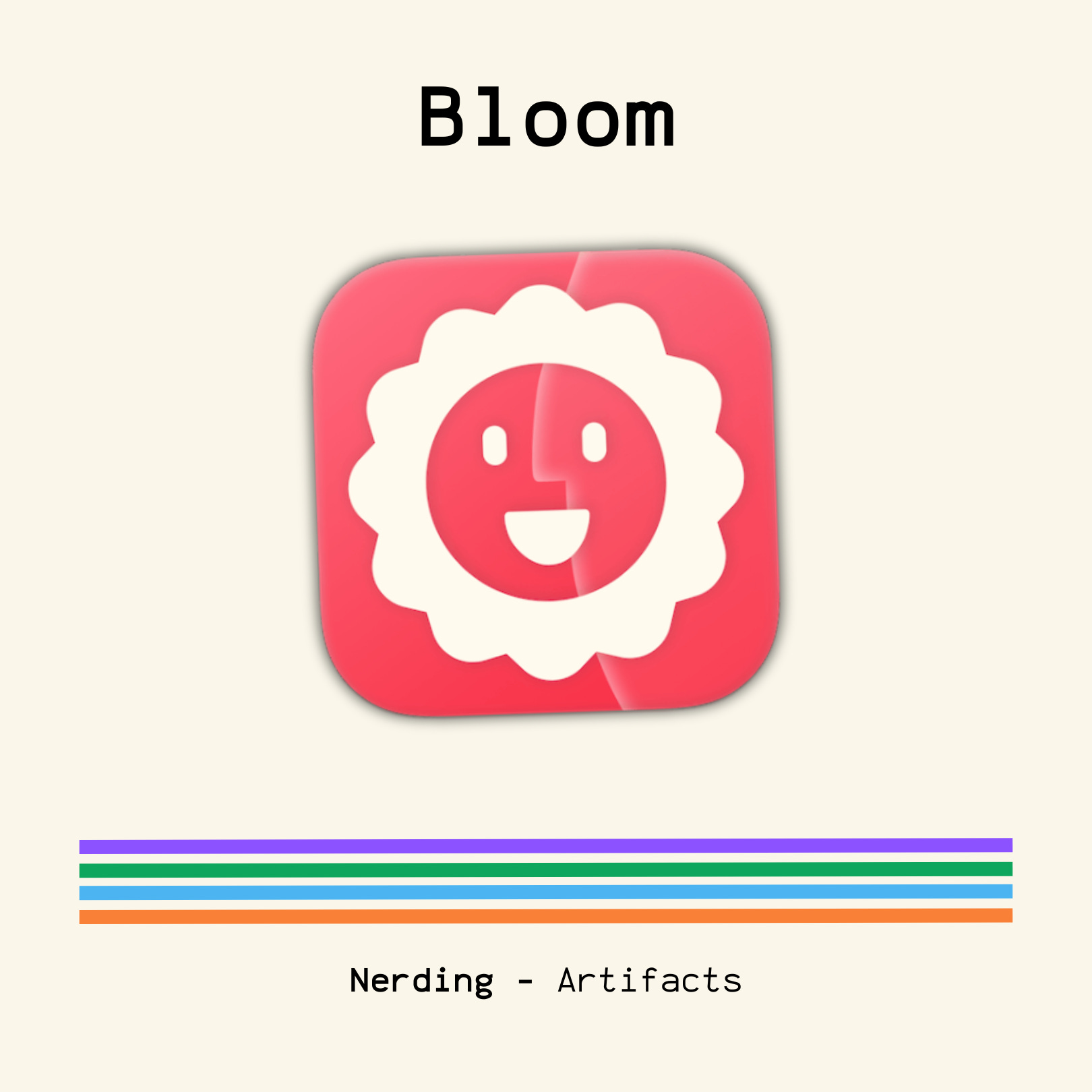
Finder for Mac isn’t always super intuitive, but Bloom can make it better and more usable. If you struggle with finding that old document or organising your digital archive, it can help you a lot.
☕?
If you want to know more about Artifacts, where it all started, or just want to connect...